

This post contains affiliate links.

Are you a kimchi lover who’s wondered how to make kimchi at home? I’m walking you through my easy process for making your own kimchi! As a lover of all things fermentation, I’ve perfected this beginner’s kimchi over the years. It has easy-to-find ingredients, step-by-step photo instructions, and dozens of five-star reviews. Let’s ferment!

 save this recipe!
At its core, kimchi is fermented cabbage. But it’s so much more. It’s spicy and umami and sour and perfect for adding zing to everything from fried rice to tacos!
But making kimchi is anything but a mystery. It’s truly so easy! After years of making it for our family, I’ve developed a method for making kimchi that’s straight-forward, using ingredients that can be found in most Western grocery stores.
Reader rating
“We have tried so many kimchee recipes, and this one is definitely the best! Thank you!!” —Wendy
Kimchi 101
Kimchi is made by lacto-fermentation of napa cabbage, which is fermentation by Lactobacillus bacteria (the same kind of fermentation that gives us tangy fermented yogurt and dill pickles!). Basically, bacteria are converting sugars into lactic acid!
Kimchi origins and benefits
Kimchi has been a staple of Korean cuisine for over a thousand years, originally developed as a way to preserve vegetables through the cold winter months when fresh produce wasn’t available. What started as a practical necessity became a defining part of Korean food culture, with regional and seasonal variations passed down through generations.
Beyond its cultural significance, kimchi is a fermented food, which means it naturally develops beneficial bacteria during the fermentation process! The tangy, slightly funky flavor is a byproduct of the same fermentation that makes it good for gut health.

Kimchi…but make it vegan
Traditional kimchi isn’t vegetarian. Most authentic kimchi recipes include fish sauce, which adds umami taste.
To make this kimchi plant-based, I tried two variations without fish sauce: in the first, I simply omitted it, and in the second, I used miso paste instead. Both vegan kimchi variations were delicious, and the recipes are included below!
Key Ingredients
This is just an overview–jump to the recipe for full instructions!
- Napa Cabbage: Otherwise known as Chinese cabbage, this will form the base of the kimchi.
- Non-Iodized Salt: Aim for iodine-free or kosher salt (iodized salt may prevent fermentation and can lead to a metallic taste).
- Korean Pepper Flakes: Otherwise known as gochugaru. Find it online or check out your nearest Asian supermarket. If you’ve looked everywhere and can’t find gochugaru, you can sub hot paprika powder (but I recommend giving gochugaru a try if possible).
- Garlic, Ginger, Green Onions: Our flavor makers! You only have to be in the general vicinity of kimchi to know it contains garlic. That smell 😅
- Sugar: Just a dash of sugar is enough to kickstart the fermentation, giving the bacteria something to “feed” on.
- Carrot or Daikon Radish: Traditional kimchi uses daikon radish for added crunch, though carrot works just as well (use whichever you have access to).
How to make kimchi
The short version: brine napa cabbage in salt for about two hours, rinse it well, then mix it with a blended pepper paste of gochugaru, garlic, ginger, and a few aromatics. Pack everything into a jar, let it ferment at room temperature for a few days, then move it to the fridge once it hits the level of tang you like.
For the full step-by-step instructions, jump down to the recipe card at the bottom of this post!

Tips for How to Make Kimchi
Rinse the cabbage thoroughly. Under-rinsed cabbage will make your finished kimchi too salty. Taste a piece before moving on, it shouldn’t taste overtly salty, just well seasoned.
Use gloves when mixing. Gochugaru stains and lingers on skin. A pair of food-safe gloves saves your hands the cleanup and the smell.
How to serve kimchi
Kimchi is endlessly versatile once it’s ready. Stir it into kimchi fried rice for a quick weeknight meal, or use it as the base for a comforting bowl of Korean kimchi soup. It also works folded into cauliflower fried rice for a lower-carb spin, or served simply as a side dish alongside any rice-based meal, the way it’s traditionally enjoyed in Korean cuisine.

How to Make Kimchi

Ingredients
- 1 large head napa cabbage, 3 to 5 lbs, 1.3 to 2.2 kg
- ¼ cup non-iodized salt, 60 g
- ¼ to ½ cup gochugaru, Korean pepper flakes, depending on your spice tolerance, 30 to 60 g
- 7 to 10 cloves garlic
- 3 to 4 inches ginger, 7½ to 10 cm
- 1 tsp sugar
- 3 to 4 Tbsp water, 45 to 60 mL
- Optional: 3 Tbsp miso paste
- 2 carrots, cut into strips, or 8 oz daikon radish
- 4 green onions, cut into 1-inch pieces
Instructions
- Sterilize: Wash your hands well before every time you touch the ingredients. Wash all supplies with hot water.
- Brine: Cut 1 large head napa cabbage into large chunks, then rinse well. Place in a large bowl and cover completely with ¼ cup non-iodized salt, working the salt between all the leaves. Let sit for about 2 hours, massaging and turning the cabbage every 30 minutes, until cabbage has wilted down. When finished, drain and rinse the cabbage very well (until a torn-off piece no longer tastes overly salty). Squeeze out excess water.

- Flavor: While cabbage is in the brine, add the ¼ to ½ cup gochugaru, 7 to 10 cloves garlic, 3 to 4 inches ginger, 1 tsp sugar, and 3 to 4 Tbsp water* to a clean food processor. If desired, add miso paste as well (for umami taste). Blitz until smooth.

- Mix: Combine the well-rinsed cabbage, pepper paste, 2 carrots (or daikon radish), and 4 green onions in a large bowl, mixing well with clean hands (you may choose to use gloves here to prevent your hands from smelling).
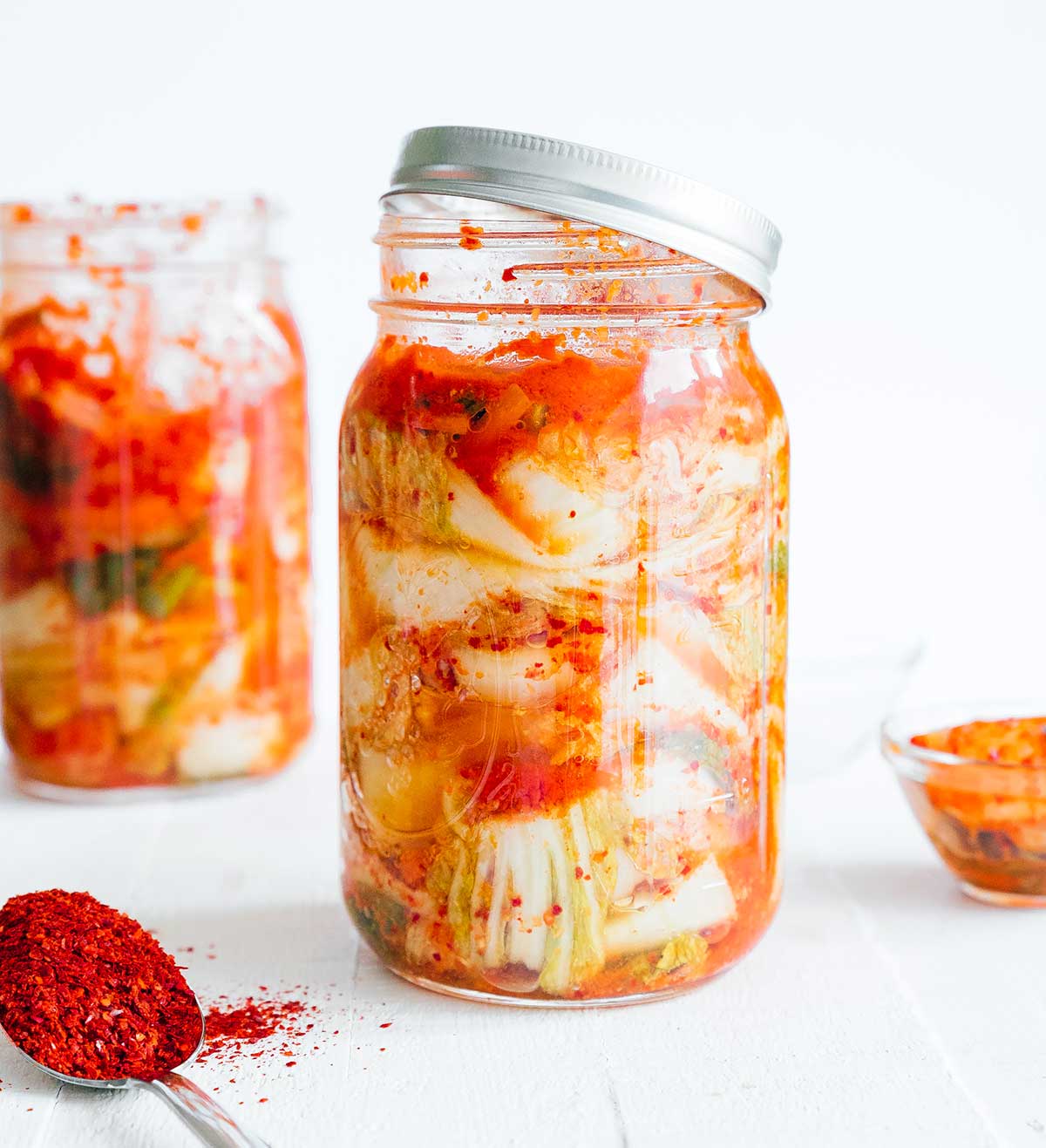
- Ferment: Pack the mixture into clean glass jar(s), pressing down so that it’s submerged by the juices and there are as few air pockets as possible. Leave at least an inch of free space at the top of the jar, then seal shut with a lid. Set the sealed jar on a plate or bowl (to catch possible spills), and place somewhere room temperature and out of direct sunlight, letting it ferment for 2 to 5 days.

- Upkeep and storage: Check on the kimchi everyday, pushing the cabbage down with clean fingers or a spoon to release gasses and prevent leaks. It's done when the taste is slightly sour and cabbage is a bit soft (depends on your taste – longer fermentation will result in a more sour, less crunchy kimchi). When finished, store in the fridge to stop the fermentation process.


Notes
Nutrition
Nutrition information calculated by Sarah Bond, degreed nutritionist.
 did you make this?Leave a comment below and tag @liveeatlearn on social media! I love seeing what you’ve made!
More Favorites from Live Eat Learn
Serving ideas
Kimchi is great served on its own as a side dish of sorts, but you can also use it as a condiment or topping on a bunch of recipes! Here are our favorite ways to use kimchi, from Korean cooking to unique twists:

Kimchi Tempeh Tacos
20 minutes

Loaded Kimchi Fries
15 minutes

Kimchi Soup Recipe | Kimchi-Jjigae
30 minutes

15-Minute Kimchi Fried Rice
15 minutes

Questions?
Hi, friends! Sarah here, food scientist, nutritionist, and creator if this easy kimchi recipe! If you have any questions, just leave a comment below. I personally answer comments and questions every weekday!




where do you add the brine? how much do you add?
this i the recipie…. after rinsing..While cabbage is in the brine, add the ¼ to ½ cup gochugaru, 7 to 10 cloves garlic, 3 to 4 inches ginger, 1 tsp sugar, and 3 to 4 Tbsp water* to a clean food processor. If desired, add miso paste as well (for umami taste). Blitz until smooth.
The brine is just what is created when you mix the cabbage with the salt. It will naturally release some moisture, and that is called the brine!
Hi again. I thought that I had rinsed my cabbage well enough, but I guess that I hadn’t. The kimchi has fermented for a week and is now in the fridge. It is extremely salty now. Can I add some liquid to rinse off the salt without spoiling the taste?
You could perhaps make another batch and then mix that into the salty batch to sort of even it out. I’m afraid if you rinse it, you’ll rinse off all that good kimchi flavor that you built up!
Thank you for sharing, recipe is clear and simple to make. Delicious❣️
Hello! My recipe is far too salty! How do I make it less salty? Thanks!
Make sure to rinse the salt off the cabbage well before fermenting!
Hi, thanks for the recipe. I think there is too much salt. For 500g cabbage and a dry brine ~1-2 tbsp is enough.